
Chapter: Reproductive Health
0 of 44 questions completed
Questions:
- 1
- 2
- 3
- 4
- 5
- 6
- 7
- 8
- 9
- 10
- 11
- 12
- 13
- 14
- 15
- 16
- 17
- 18
- 19
- 20
- 21
- 22
- 23
- 24
- 25
- 26
- 27
- 28
- 29
- 30
- 31
- 32
- 33
- 34
- 35
- 36
- 37
- 38
- 39
- 40
- 41
- 42
- 43
- 44
Information
Subject: Biology
Syllabus: Reproductive Health
Duration: 45 min.
Read the following instruction carefully.
- There are 44 total questions in this test
- Each question has 4 options out of which only one is correct.
- You will be awarded 4 points for each correct answer and 1 point will be deducted for each wrong answer.
- Try not to guess the answer as there is negative marking.
- Your Score & Rank will be shown after submitting the test.
- In this quiz you are going to check your conceptual knowledge.
You have already completed the Test before. Hence you can not start it again.
Test is loading...
You must sign in or sign up to start the Test.
You have to finish following quiz, to start this Test:
Your results are here!! for" NPY_12_Bio_26_04_Reproductive Health "
0 of 44 questions answered correctly
Your time:
Time has elapsed
Your Final Score is : 0
You have attempted : 0
Number of Correct Questions : 0 and scored 0
Number of Incorrect Questions : 0 and Negative marks 0
| Average score |
|
| Your score |
|
-
Level 1
You have attempted: 0
Number of Correct Questions: 0 and scored 0
Number of Incorrect Questions: 0 and Negative marks 0
-
Dear $form{0} you have completed this test.
| Pos. | Name | Entered on | Points | Result |
|---|---|---|---|---|
| Table is loading | ||||
| No data available | ||||
- 1
- 2
- 3
- 4
- 5
- 6
- 7
- 8
- 9
- 10
- 11
- 12
- 13
- 14
- 15
- 16
- 17
- 18
- 19
- 20
- 21
- 22
- 23
- 24
- 25
- 26
- 27
- 28
- 29
- 30
- 31
- 32
- 33
- 34
- 35
- 36
- 37
- 38
- 39
- 40
- 41
- 42
- 43
- 44
- Answered
- Review
-
Question 1 of 44
1. Question
4 pointsWhich one of the following is an example of hormone releasing IUD?
-
Question 2 of 44
2. Question
4 pointsMatch the List-I with List-II.
List I List II
A. Vaults 1. Entry of sperm through cervix is blocke
B. IUDs 2. Removal of vas deferens
C. Vasectomy 3. Phagocytosis of sperms within the uterus
D. Tubectomy 4. Removal of Fallopiantube
Choose the correct answer from the options given below.
-
Question 3 of 44
3. Question
4 pointsProgestogens alone or in combination with oestrogens can be used as a contraceptive in the form of
-
Question 4 of 44
4. Question
4 pointsWhich of the following is a correct statement?
-
Question 5 of 44
5. Question
4 pointsSelect the hormone- releasing Intra-Uterine Devices.
-
Question 6 of 44
6. Question
4 pointsWhich of the following contraceptive methods do involve a role of hormone?
-
Question 7 of 44
7. Question
4 pointsThe function of copper ions in copper releasing IUD’s is
-
Question 8 of 44
8. Question
4 pointsWhich of the following approaches does not give the defined action of contraceptive?
-
Question 9 of 44
9. Question
4 pointsIn context of amniocentesis, which of the following statement is incorrect?
-
Question 10 of 44
10. Question
4 pointsWhich of the following is incorrect regarding vasectomy?
-
Question 11 of 44
11. Question
4 pointsWhich of the following is hormone-releasing IUD?
-
Question 12 of 44
12. Question
4 pointsTubectomy is a method of sterilisation in which
-
Question 13 of 44
13. Question
4 pointsWhich of the following is a hormone releasing Intrauterine Device (IUD)?
-
Question 14 of 44
14. Question
4 pointsWhich of the following cannot be detected in a developing foetus by amniocentesis?
-
Question 15 of 44
15. Question
4 pointsOne of the legal methods of birth control is
-
Question 16 of 44
16. Question
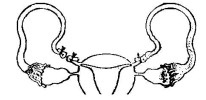
4 pointsWhat is the figure given below showing in particular?
-
Question 17 of 44
17. Question
4 pointsWhich one of the following is the most widely accepted method of contraception in India, at present?
-
Question 18 of 44
18. Question
4 pointsThe permissible use of the technique amniocentesis is for
-
Question 19 of 44
19. Question
4 pointsCu ions released from opper-releasing Intra Uterine Devices (IUDs)
-
Question 20 of 44
20. Question
4 pointsConsider the statement given below regarding contraception and answer as directed thereafter
1. Medical Termination of Pregnancy (MTP) during first trimester is generally safe.
2. Generally chances of conception are nil until mother breast-feeds the infant up to two years.
3. Intra uterine devices like copper-T are effective contraceptives.
4. Contraception pills may be taken up to one week after coitus to prevent contraception.
Which two of the above statements are correct? -
Question 21 of 44
21. Question
4 pointsGiven below are four methods (A-D) and their modes of action (i-iv) in achieving contraception.
Select their correct matching from the four option that follow.
Method Mode of Action
A. The pill (i) Prevents sperms reaching cervix
B. Condom (ii) Prevents implantation
C. Vasectomy (iii) Prevents ovulation
D. Copper-T (iv) Semen contains no sperm -
Question 22 of 44
22. Question
4 pointsIn a population, unrestricted reproductive capacity is called
-
Question 23 of 44
23. Question
4 pointsProgesterone, which is the most important component of oral contraceptive pils, prevents pregnancy by
-
Question 24 of 44
24. Question
4 pointsTablets to prevent contraception contain
-
Question 25 of 44
25. Question
4 pointsAmniocentesis is a process to
-
Question 26 of 44
26. Question
4 pointsHuman population growth in India
-
Question 27 of 44
27. Question
4 pointsIn India, human population is heavily weighed towards the younger age groups as a result of
-
Question 28 of 44
28. Question
4 pointsVeneral diseases can spread through
I. Using sterile needles.
II. Transfusion of blood from infected person.
III. Infected mother to foetus.
IV. Kissing.
V. Inheritance.
Choose the correct answer from the options given below -
Question 29 of 44
29. Question
4 pointsWhich of the following STDs are not curable?
-
Question 30 of 44
30. Question
4 pointsSelect the option including all sexually transmitted diseases.
-
Question 31 of 44
31. Question
4 pointsWhich of the following sexually transmitted diseases do not specifically affect reproductive organs?
-
Question 32 of 44
32. Question
4 pointsMatch the following sexually transmitted diseases (column I) with their causative agent (column II) and select the correct option.
Column I Column II(P) Gonorrhea 1. HIV
(Q) Syphilis 2. Neisseria
(R) Genital Warts 3. Treponema
(S) AIDS 4. Human Papilloma Virus
-
Question 33 of 44
33. Question
4 pointsIn which of the following techniques, the embryos are transferred to assist those females who cannot conceive?
-
Question 34 of 44
34. Question
4 pointsIn case of a couple, where the male is having a very low sperm count, which technique will be suitable for fertilisation?
-
Question 35 of 44
35. Question
4 pointsEmbryo with more than 16 blastomeres formed due to in vitro fertilisation is transferred into
-
Question 36 of 44
36. Question
4 pointsA childless couple can be assisted to have a child through a technique called GIFT. The full form of this technique is
-
Question 37 of 44
37. Question
4 pointsAssisted reproductive technology, IVF involves transfer of
-
Question 38 of 44
38. Question
4 pointsArtificial insemination means
-
Question 39 of 44
39. Question
4 pointsThe test-tube baby programme employs which one of the following techniques?
-
Question 40 of 44
40. Question
4 pointsMedical Termination of Pregnancy (MTP) is considered safe up to how many weeks of pregnancy?
-
Question 41 of 44
41. Question
4 pointsIn vitro fertilisation is a technique that involves transfer of which one of the following into the Fallopian tube?
-
Question 42 of 44
42. Question
4 pointsCertain characteristic demographic features of developing countries are
-
Question 43 of 44
43. Question
4 pointsTest-tube baby means a baby born when
-
Question 44 of 44
44. Question
4 pointsTest-tube baby is one who
