
Chapter: Biodiversity and its Conservation
0 of 65 questions completed
Questions:
- 1
- 2
- 3
- 4
- 5
- 6
- 7
- 8
- 9
- 10
- 11
- 12
- 13
- 14
- 15
- 16
- 17
- 18
- 19
- 20
- 21
- 22
- 23
- 24
- 25
- 26
- 27
- 28
- 29
- 30
- 31
- 32
- 33
- 34
- 35
- 36
- 37
- 38
- 39
- 40
- 41
- 42
- 43
- 44
- 45
- 46
- 47
- 48
- 49
- 50
- 51
- 52
- 53
- 54
- 55
- 56
- 57
- 58
- 59
- 60
- 61
- 62
- 63
- 64
- 65
Information
Subject: Biology
Syllabus: Biodiversity and Its Conservation
Duration: 1 Hr.
Read the following instruction carefully.
- There are 65 total questions in this test
- Each question has 4 options out of which only one is correct.
- You will be awarded 4 points for each correct answer and 1 point will be deducted for each wrong answer.
- Try not to guess the answer as there is negative marking.
- Your Score & Rank will be shown after submitting the test.
- In this quiz you are going to check your conceptual knowledge.
You have already completed the Test before. Hence you can not start it again.
Test is loading...
You must sign in or sign up to start the Test.
You have to finish following quiz, to start this Test:
Your results are here!! for" NPY_12_Bio_37_15_Biodiversity and Its Conservation "
0 of 65 questions answered correctly
Your time:
Time has elapsed
Your Final Score is : 0
You have attempted : 0
Number of Correct Questions : 0 and scored 0
Number of Incorrect Questions : 0 and Negative marks 0
| Average score |
|
| Your score |
|
-
Not categorized
You have attempted: 0
Number of Correct Questions: 0 and scored 0
Number of Incorrect Questions: 0 and Negative marks 0
-
Level 1
You have attempted: 0
Number of Correct Questions: 0 and scored 0
Number of Incorrect Questions: 0 and Negative marks 0
-
Dear $form{0} you have completed this test.
| Pos. | Name | Entered on | Points | Result |
|---|---|---|---|---|
| Table is loading | ||||
| No data available | ||||
- 1
- 2
- 3
- 4
- 5
- 6
- 7
- 8
- 9
- 10
- 11
- 12
- 13
- 14
- 15
- 16
- 17
- 18
- 19
- 20
- 21
- 22
- 23
- 24
- 25
- 26
- 27
- 28
- 29
- 30
- 31
- 32
- 33
- 34
- 35
- 36
- 37
- 38
- 39
- 40
- 41
- 42
- 43
- 44
- 45
- 46
- 47
- 48
- 49
- 50
- 51
- 52
- 53
- 54
- 55
- 56
- 57
- 58
- 59
- 60
- 61
- 62
- 63
- 64
- 65
- Answered
- Review
-
Question 1 of 65
1. Question
4 pointsWhich of the following regions of the globe exhibits highest species diversity?
-
Question 2 of 65
2. Question
4 pointsDecline in the population of Indian native fishes due to introduction of Clarias gariepinus in river Yamuna can be categoriesd as
-
Question 3 of 65
3. Question
4 pointsWhich of the following is the most important cause for animals and plants being driven to extinction?
-
Question 4 of 65
4. Question
4 pointsWhich is the National Aquatic Animal of India?
-
Question 5 of 65
5. Question
4 pointsPlants such as Prosopis, Acacia and Capparis represent examples of tropical
-
Question 6 of 65
6. Question
4 pointsAlexander von Humbolt described for the first time
-
Question 7 of 65
7. Question
4 pointsWhich of the following is the most important cause of animals and plants being driven to extinction?
-
Question 8 of 65
8. Question
4 pointsRed List contains data or information on
-
Question 9 of 65
9. Question
4 pointsWhich of the following is correctly matched?
-
Question 10 of 65
10. Question
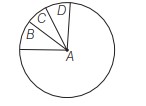
4 pointsGiven below is the representation of the extent of global diversity of invertebrates. What groups the four portions (A-D) represent respectively?
-
Question 11 of 65
11. Question
4 pointsA species facing extremely high risk of extinction in the immediate future is called
-
Question 12 of 65
12. Question
4 pointsThe organisation which publishes the Red List of species is
-
Question 13 of 65
13. Question
4 pointsWhich of the following represent maximum number of species among global biodiversity?
-
Question 14 of 65
14. Question
4 pointsMaximum nutritional diversity is found in the group
-
Question 15 of 65
15. Question
4 pointsThe highest number of species in the world is represented by
-
Question 16 of 65
16. Question
4 pointsWhich one of the following shows maximum genetic diversity in India?
-
Question 17 of 65
17. Question
4 pointsdocumented varieties grown in India. 17 Which one of the following have the highest number of species in nature?
-
Question 18 of 65
18. Question
4 pointsWhich one of the following expanded forms of the following acronyms is correct?
-
Question 19 of 65
19. Question
4 pointsICBN stands for
-
Question 20 of 65
20. Question
4 pointsWhich one of the following pairs of organisms are exotic species introduced in India?
-
Question 21 of 65
21. Question
4 pointsWhich of the following pairs of an animal and a plant represents endangered organisms in India?
-
Question 22 of 65
22. Question
4 pointsWhat is a keystone species?
-
Question 23 of 65
23. Question
4 pointsAccording to IUCN Red List, what is the status of red panda (Athurus fulgens)?
-
Question 24 of 65
24. Question
4 pointsBiodiversity act of India was passed by the Parliament in the year
-
Question 25 of 65
25. Question
4 pointsWhich endangered animal is the source of the world’s finest, lightest, warmest and most expensive wool —the shahtoosh?
-
Question 26 of 65
26. Question
4 pointsWhich group of vertebrates comprises the highest number of endangered species?
-
Question 27 of 65
27. Question
4 pointsThe endangered largest living lemur Idri idri is inhabitant of
-
Question 28 of 65
28. Question
4 pointsWhich of the following is mainly responsible for extinction of wildlife?
-
Question 29 of 65
29. Question
4 pointsWhich of the following is the main factor of desertification?
-
Question 30 of 65
30. Question
4 pointsIf the forest cover is reduced to half, what is most likely to happen on a long basis?
-
Question 31 of 65
31. Question
4 pointsWildlife is destroyed most when
-
Question 32 of 65
32. Question
4 pointsWhich animal has become extinct from India?
-
Question 33 of 65
33. Question
4 pointsSpecies diversity increases as one proceeds from
-
Question 34 of 65
34. Question
4 pointsAmerican water plant that has become a troublesome water weed in India is
-
Question 35 of 65
35. Question
4 pointsIn the following in each set a conservation approach and an example of method of conservation are given
(1) In situ conservation–Biosphere reserve
(2) Ex situ conservation–Sacred groves
(3) In situ conservation–Seed bank
(4) Ex situ conservation– Cryopreservation
Select the option with correct match of approach and method. -
Question 36 of 65
36. Question
4 pointsWhich one of the following is not a method of in situ conservation of biodiversity?
-
Question 37 of 65
37. Question
4 pointsThe Earth Summit held in Rio de Janeiro in 1992 was called
-
Question 38 of 65
38. Question
4 pointsAll of the following are included in ex-situ conservation except
-
Question 39 of 65
39. Question
4 pointsWhich one of the following is related to Ex situ conservation of threatened animals and plants?
-
Question 40 of 65
40. Question
4 pointsThe region of biosphere reserve, which is legally protected and where no human activity is allowed is known as
-
Question 41 of 65
41. Question
4 pointsJoint Forest Management Concept was introduced in India during
-
Question 42 of 65
42. Question
4 pointsWhich of the following national parks is home to the famous musk deer or hangul?
-
Question 43 of 65
43. Question
4 pointsHow many hotspots of biodiversity in the world have been identified till date by Norman Myers?
-
Question 44 of 65
44. Question
4 pointsThe species confined to a particular region and not found elsewhere is termed as
-
Question 45 of 65
45. Question
4 pointsJust as a person moving from Delhi to Shimla to escape the heat for the duration of hot summer, thousands of migratory birds from Siberia and other extremely cold Northern regions move to
-
Question 46 of 65
46. Question
4 pointsAn example of ex situ conservation is
-
Question 47 of 65
47. Question
4 pointsWhich one of the following is not used for ex situ plant conservation?
-
Question 48 of 65
48. Question
4 pointsWhich one of the following areas in India, is a hot spot of biodiversity?
-
Question 49 of 65
49. Question
4 pointsSelect the correct statement about biodiversity.
-
Question 50 of 65
50. Question
4 pointsA collection of plants and seeds having diverse alleles of all the genes of a crop is called
-
Question 51 of 65
51. Question
4 pointsTiger is not a resident, in which one of the following national parks?
-
Question 52 of 65
52. Question
4 pointsWhich one of the following is not observed in biodiversity hot spots?
-
Question 53 of 65
53. Question
4 pointsWorld Summit on Sustainable Development (2002) was held in
-
Question 54 of 65
54. Question
4 pointsOne of endangered species of Indian medicinal plants is that of
-
Question 55 of 65
55. Question
4 pointsIdentify the odd combination of the habitat and the particular animal concerned.
-
Question 56 of 65
56. Question
4 pointsWhich one of the following is not included under in situ conservation?
-
Question 57 of 65
57. Question
4 pointsWhich of the following is considered a hotspot of biodiversity in India?
-
Question 58 of 65
58. Question
4 pointsOne of the most important function of botanical garden is that
-
Question 59 of 65
59. Question
4 pointsIn your opinion which is the most effective way to conserve the plant diversity of an area?
-
Question 60 of 65
60. Question
4 pointsSpecies restricted to a given area are called
-
Question 61 of 65
61. Question
4 pointsMAB stands for
-
Question 62 of 65
62. Question
4 pointsA number of natural reserves have been created to conserve specific wildlife species. Identify the correct combination from the following
-
Question 63 of 65
63. Question
4 pointsWhich of the following is the correct matching pair of a sanctuary and its main protected wild animal?
-
Question 64 of 65
64. Question
4 pointsNational Park associated with rhinoceros is
-
Question 65 of 65
65. Question
4 pointsRanthambore National Park is situated in
