
Chapter: Cell: The Unit of Life
0 of 95 questions completed
Questions:
- 1
- 2
- 3
- 4
- 5
- 6
- 7
- 8
- 9
- 10
- 11
- 12
- 13
- 14
- 15
- 16
- 17
- 18
- 19
- 20
- 21
- 22
- 23
- 24
- 25
- 26
- 27
- 28
- 29
- 30
- 31
- 32
- 33
- 34
- 35
- 36
- 37
- 38
- 39
- 40
- 41
- 42
- 43
- 44
- 45
- 46
- 47
- 48
- 49
- 50
- 51
- 52
- 53
- 54
- 55
- 56
- 57
- 58
- 59
- 60
- 61
- 62
- 63
- 64
- 65
- 66
- 67
- 68
- 69
- 70
- 71
- 72
- 73
- 74
- 75
- 76
- 77
- 78
- 79
- 80
- 81
- 82
- 83
- 84
- 85
- 86
- 87
- 88
- 89
- 90
- 91
- 92
- 93
- 94
- 95
Information
Subject: Biology
Syllabus: Biomolecules
Duration: 1 Hr.
Read the following instruction carefully.
- There are 95 total questions in this test
- Each question has 4 options out of which only one is correct.
- You will be awarded 4 points for each correct answer and 1 point will be deducted for each wrong answer.
- Try not to guess the answer as there is negative marking.
- Your Score & Rank will be shown after submitting the test.
- In this quiz you are going to check your conceptual knowledge.
You have already completed the Test before. Hence you can not start it again.
Test is loading...
You must sign in or sign up to start the Test.
You have to finish following quiz, to start this Test:
Your results are here!! for" NPY_11_Bio_09_09_Biomolecules "
0 of 95 questions answered correctly
Your time:
Time has elapsed
Your Final Score is : 0
You have attempted : 0
Number of Correct Questions : 0 and scored 0
Number of Incorrect Questions : 0 and Negative marks 0
| Average score |
|
| Your score |
|
-
Not categorized
You have attempted: 0
Number of Correct Questions: 0 and scored 0
Number of Incorrect Questions: 0 and Negative marks 0
-
Level 1
You have attempted: 0
Number of Correct Questions: 0 and scored 0
Number of Incorrect Questions: 0 and Negative marks 0
-
Dear $form{0} you have completed this test.
| Pos. | Name | Entered on | Points | Result |
|---|---|---|---|---|
| Table is loading | ||||
| No data available | ||||
- 1
- 2
- 3
- 4
- 5
- 6
- 7
- 8
- 9
- 10
- 11
- 12
- 13
- 14
- 15
- 16
- 17
- 18
- 19
- 20
- 21
- 22
- 23
- 24
- 25
- 26
- 27
- 28
- 29
- 30
- 31
- 32
- 33
- 34
- 35
- 36
- 37
- 38
- 39
- 40
- 41
- 42
- 43
- 44
- 45
- 46
- 47
- 48
- 49
- 50
- 51
- 52
- 53
- 54
- 55
- 56
- 57
- 58
- 59
- 60
- 61
- 62
- 63
- 64
- 65
- 66
- 67
- 68
- 69
- 70
- 71
- 72
- 73
- 74
- 75
- 76
- 77
- 78
- 79
- 80
- 81
- 82
- 83
- 84
- 85
- 86
- 87
- 88
- 89
- 90
- 91
- 92
- 93
- 94
- 95
- Answered
- Review
-
Question 1 of 95
1. Question
4 pointsWhich of the following are not secondary metabolites in plants?
-
Question 2 of 95
2. Question
4 pointsFloridean starch has structure similar to
-
Question 3 of 95
3. Question
4 pointsWhich two functional groups are characteristic of sugars?
-
Question 4 of 95
4. Question
4 pointsThe chitinous exoskeleton of arthropods is formed by the polymerisation of
-
Question 5 of 95
5. Question
4 pointsWhich one of the following is a non-reducing carbohydrate?
-
Question 6 of 95
6. Question
4 pointsMacromolecule chitin is
-
Question 7 of 95
7. Question
4 pointsWhich one of the following pairs is wrongly matched?
-
Question 8 of 95
8. Question
4 pointsAbout 98 per cent of the mass of every living organism is composed of just six elements including carbon, hydrogen, nitrogen, oxygen and
-
Question 9 of 95
9. Question
4 pointsWhich of the following is a reducing sugar?
-
Question 10 of 95
10. Question
4 pointsMost abundant organic compound on earth is
-
Question 11 of 95
11. Question
4 pointsLactose is composed of
-
Question 12 of 95
12. Question
4 pointsCellulose, the most important constituent of plant cell wall is made of
-
Question 13 of 95
13. Question
4 pointsIn which one of the following groups, all the three are examples of polysaccharides?
-
Question 14 of 95
14. Question
4 pointsGlycogen is a polymer of
-
Question 15 of 95
15. Question
4 pointsLiving cell contains 60-75% water. Water present in human body is
-
Question 16 of 95
16. Question
4 pointsWhich one of the following is the most abundant protein in the animals?
-
Question 17 of 95
17. Question
4 pointsIdentify the substances having glycosidic bond and peptide bond respectively in their structure.
-
Question 18 of 95
18. Question
4 pointsIdentify the basic amino acid from the following.
-
Question 19 of 95
19. Question
4 points“Ramachandran plot” is used to confirm the structure of
-
Question 20 of 95
20. Question
4 pointsWhich of the following is an amino acid derived hormone?
-
Question 21 of 95
21. Question
4 pointsWhich of the following is the least likely to be involved in stabilising the three-dimensional folding of most proteins?
-
Question 22 of 95
22. Question
4 pointsWhich one is the most abundant protein in the animal world?
-
Question 23 of 95
23. Question
4 pointsWhich one out of A-D given below correctly represents the structural formula of the basic amino acid?
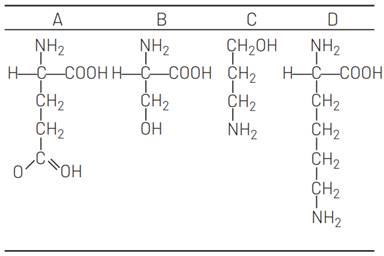
-
Question 24 of 95
24. Question
4 pointsWhich of the following is the simplest amino acid?
-
Question 25 of 95
25. Question
4 pointsCollagen is
-
Question 26 of 95
26. Question
4 pointsWhich is an essential amino acid?
-
Question 27 of 95
27. Question
4 pointsConjugated proteins containing carbohydrates as prosthetic group are known as
-
Question 28 of 95
28. Question
4 pointsWhat is common among amylase, rennin and trypsin?
-
Question 29 of 95
29. Question
4 pointsMost diverse macromolecules, found in the cell both physically and chemically are
-
Question 30 of 95
30. Question
4 pointsThe pyrenoids are made up of
-
Question 31 of 95
31. Question
4 pointsAmino acids are produced from
-
Question 32 of 95
32. Question
4 pointsFollowing are the statements with reference to lipids.
I. Lipids having only single bonds are called unsaturated fatty acids.
II. Lecithin is a phospholipid.
III. Trihydroxy propane is glycerol.
IV. Palmitic acid has 20 carbon atoms including carboxyl carbon.
V. Arachidonic acid has 16 carbon atoms.
Choose the correct answer from the options given below -
Question 33 of 95
33. Question
4 pointsWhich of the following are not polymeric ?
-
Question 34 of 95
34. Question
4 pointsA typical fat molecule is made up of
-
Question 35 of 95
35. Question
4 pointsA phosphoglyceride is always made up of
-
Question 36 of 95
36. Question
4 pointsWhich one of the following is not a constituent of cell membrane?
-
Question 37 of 95
37. Question
4 pointsLipids are insoluble in water because lipid molecules are
-
Question 38 of 95
38. Question
4 pointsWhich steroid is used for transformation?
-
Question 39 of 95
39. Question
4 pointsSpoilage of oil can be detected by which fatty acid?
-
Question 40 of 95
40. Question
4 pointsMatch the List-I with List-II.
List-I List-II
A. Protein 1. C= C double bonds
B. Unsaturated fatty acid 2. Phosphodiester bonds
C. Nucleic acid 3. Glycosidic bonds
D. Polysaccharide 4. Peptide bonds
Choose the correct answer from the options given below. -
Question 41 of 95
41. Question
4 pointsMatch the items in Column I with those in Column II.
ColumnI Column II
A. Aquaporin (i) Amide
B. Asparagine (ii) Polysaccharide
C. Abscisic acid (iii) Polypeptide
D. Chitin (iv) Carotenoids
Select the correct option. -
Question 42 of 95
42. Question
4 pointsDNA precipitation out of a mixture of biomolecules can be achieved by treatment with
-
Question 43 of 95
43. Question
4 pointsWhich one of the following statements is wrong?
-
Question 44 of 95
44. Question
4 pointsWhich of the following biomolecules does have a phosphodiester bond?
-
Question 45 of 95
45. Question
4 pointsGiven below is the diagrammatic representation of one of the categories of small molecular weight organic compounds in the living tissues. Identify the category shown and the one blank component X in it
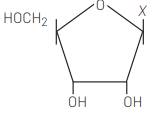
-
Question 46 of 95
46. Question
4 pointsWhich one of the following structural formula of two organic compounds is correctly identified along with its related function?
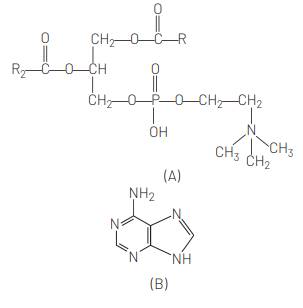
-
Question 47 of 95
47. Question
4 pointsWhich one of the following is the correct matching of three items and their grouping category?Items Group
(1) Malleus, incus, cochlea— Ear ossicles
(2) Ilium, ischium,pubis— Coxal bones of pelvic girdle
(3) Actin, myosin, rhodopsin— Muscle proteins
(4) Cytosine, uracil, thymine—Pyrimidines -
Question 48 of 95
48. Question
4 pointsWhich one of the following pairs of nitrogenous bases of nucleic acids, is wrongly matched with the category mentioned against it?
-
Question 49 of 95
49. Question
4 pointsIn the DNA molecule
-
Question 50 of 95
50. Question
4 pointsThe two polynucleotide chains in DNA are
-
Question 51 of 95
51. Question
4 pointsOne turn of the helix in a B-form DNA is approximately
-
Question 52 of 95
52. Question
4 pointsNucleotides are building blocks of nucleic acids. Each nucleotide is a composite molecule formed by
-
Question 53 of 95
53. Question
4 pointsATP is a
-
Question 54 of 95
54. Question
4 pointsWhich one of the following amino acids is an essential part of human diet ?
-
Question 55 of 95
55. Question
4 pointsRadioactive thymidine when added to the medium surrounding living mammalian cells gets incorporated into the newly synthesised DNA. Which of the following types of chromatin is expected to become radioactive if cells are exposed radioactive thymidine as soon as they enter the S-phase?
-
Question 56 of 95
56. Question
4 pointsDNA synthesis can be specifically measured by estimating the incorporation of radio labelled
-
Question 57 of 95
57. Question
4 pointsThe nitrogenous organic base purine occurring in RNA is
-
Question 58 of 95
58. Question
4 pointsTwo free ribonucleotide units are interlinked with
-
Question 59 of 95
59. Question
4 pointsWhich is wrong about nucleic acids?
-
Question 60 of 95
60. Question
4 pointsAdenine is
-
Question 61 of 95
61. Question
4 pointsWhich is distributed more widely in a cell?
-
Question 62 of 95
62. Question
4 pointsThe basic unit of nucleic acid is
-
Question 63 of 95
63. Question
4 pointsDNA is composed of repeating units of
-
Question 64 of 95
64. Question
4 pointsIn RNA, thymine is replaced by
-
Question 65 of 95
65. Question
4 pointsRNA does not possess
-
Question 66 of 95
66. Question
4 pointsIn double helix of DNA, the two DNA strands are
-
Question 67 of 95
67. Question
4 pointsMatch the following columns.
Column I Column II
A. Inhibitor of catalytic activity 1. Ricin
B. Possess peptide bonds 2. Malonate
C. Cell wall material in fungi 3. Chitin
D. Secondary metabolite 4. Collagen
Choose the correct option. -
Question 68 of 95
68. Question
4 pointsProsthetic groups differ from coenzymes in that
-
Question 69 of 95
69. Question
4 pointsWhich of the following is a commercial blood cholesterol lowering agent?
-
Question 70 of 95
70. Question
4 pointsConsider the following statement
(i) Coenzyme or metal ion that is tightly bound to enzyme protein is called prosthetic group.
(ii) A complete catalytic active enzyme with its bound prosthetic group is called apoenzyme.
Select the correct option. -
Question 71 of 95
71. Question
4 pointsSelect the correct match
-
Question 72 of 95
72. Question
4 pointsWhich one of the following statements is correct, with reference to enzymes?
-
Question 73 of 95
73. Question
4 pointsWhich of the following describes the given graph correctly?
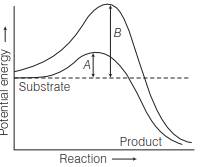
-
Question 74 of 95
74. Question
4 pointsA non-proteinaceous enzyme is
-
Question 75 of 95
75. Question
4 pointsSelect the option which is not correct with respect to enzyme action.
-
Question 76 of 95
76. Question
4 pointsTransition state structure of the substrate formed during an enzymatic reaction is
-
Question 77 of 95
77. Question
4 pointsThe essential chemical components of many coenzymes are
-
Question 78 of 95
78. Question
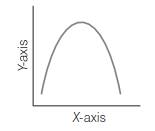
4 pointsThe curve given below shows enzymatic activity with relation to three conditions (pH, temperature and substrate concentration). What do the two axis (X and Y ) represent?
-
Question 79 of 95
79. Question
4 pointsModern detergents contain enzyme preparation of
-
Question 80 of 95
80. Question
4 pointsA competitive inhibitor of succinic dehydrogenase is
-
Question 81 of 95
81. Question
4 pointsAn organic substance bound to an enzyme and essential for its activity is called
-
Question 82 of 95
82. Question
4 pointsAn enzyme that can stimulate germination of barley seeds is
-
Question 83 of 95
83. Question
4 pointsWhich one of the following hydrolyses internal phosphodiester bonds in a polynucleotide chain?
-
Question 84 of 95
84. Question
4 pointsWhich of the following statements regarding enzyme inhibition is correct?
-
Question 85 of 95
85. Question
4 pointsEnzymes, vitamins and hormones can be classified into a single category of biological chemicals, because all of these
-
Question 86 of 95
86. Question
4 pointsThe catalytic efficiency of two different enzymes can be compared by the
-
Question 87 of 95
87. Question
4 pointsThe major role of minor elements inside living organisms is to act as
-
Question 88 of 95
88. Question
4 pointsHydrolytic enzymes which act at low pH are called as
-
Question 89 of 95
89. Question
4 pointsCytochrome is
-
Question 90 of 95
90. Question
4 pointsEnzymes enhance the rate of reaction by
-
Question 91 of 95
91. Question
4 pointsFeedback inhibition of an enzymatic reaction is caused by
-
Question 92 of 95
92. Question
4 pointsCofactor (coenzyme) is a part of holoenzyme it is
-
Question 93 of 95
93. Question
4 pointsAn enzyme brings about
-
Question 94 of 95
94. Question
4 pointsEnzymes having slightly different molecular structure but performing identical activity are
-
Question 95 of 95
95. Question
4 pointsWhich of the following is not a part of enzyme but it activates the enzyme?
