
Chapter: Morphology of Flowering Plants – Mock Test -Level-3
0 of 30 questions completed
Questions:
- 1
- 2
- 3
- 4
- 5
- 6
- 7
- 8
- 9
- 10
- 11
- 12
- 13
- 14
- 15
- 16
- 17
- 18
- 19
- 20
- 21
- 22
- 23
- 24
- 25
- 26
- 27
- 28
- 29
- 30
Information
Subject: Biology
Syllabus: Morphology of Flowering Plants
Duration: 30 min.
Read the following instruction carefully.
- There are 30 total questions in this test
- Each question has 4 options out of which only one is correct.
- You will be awarded 4 points for each correct answer and 1 point will be deducted for each wrong answer.
- Try not to guess the answer as there is negative marking.
- Your Score & Rank will be shown after submitting the test.
- In this quiz you are going to check your conceptual knowledge.
You have already completed the Test before. Hence you can not start it again.
Test is loading...
You must sign in or sign up to start the Test.
You have to finish following quiz, to start this Test:
Your results are here!! for" 23_Mock_Neet_Bio_L3_Chapter 5 : Morphology of Flowering Plants "
0 of 30 questions answered correctly
Your time:
Time has elapsed
Your Final Score is : 0
You have attempted : 0
Number of Correct Questions : 0 and scored 0
Number of Incorrect Questions : 0 and Negative marks 0
| Average score |
|
| Your score |
|
-
Level 3
You have attempted: 0
Number of Correct Questions: 0 and scored 0
Number of Incorrect Questions: 0 and Negative marks 0
-
Dear $form{0} you have completed this test.
| Pos. | Name | Entered on | Points | Result |
|---|---|---|---|---|
| Table is loading | ||||
| No data available | ||||
- 1
- 2
- 3
- 4
- 5
- 6
- 7
- 8
- 9
- 10
- 11
- 12
- 13
- 14
- 15
- 16
- 17
- 18
- 19
- 20
- 21
- 22
- 23
- 24
- 25
- 26
- 27
- 28
- 29
- 30
- Answered
- Review
-
Question 1 of 30
1. Question
4 pointsVelamen is found in
-
Question 2 of 30
2. Question
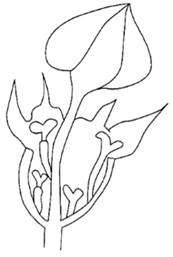
4 pointsIdentify the type of inflorescence in the given diagram
-
Question 3 of 30
3. Question
4 pointsThe reticulate venation is shown by
Smilax (monocot)
Colocassia (monocot)
Gram (dicot)
Select the correct combination from the given options -
Question 4 of 30
4. Question
4 pointsCapitulum inflorescence is found in
-
Question 5 of 30
5. Question
4 points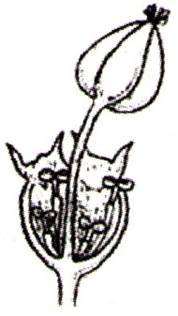
The above inflorescence is a/an -
Question 6 of 30
6. Question
4 pointsTwo dry fruits (A & B) were observed. Both developed from unilocular ovaries of monocarpellary gynoecia. In fruit. A, pericarp and seed coat are free. It liberated the seeds only after the disintegration of the pericarp. Fruit ‘B’ dehisced dorsiventrally librating the seeds. In the following, the former in the pair represents ‘A’ and latter ‘B’. to which types of fruits ‘A’ and ‘B’ respectively belong?
-
Question 7 of 30
7. Question
4 pointsWhich of the following two are the resultant of stipule modifications?
I.Spines in Ziziphus.
II.Tendrils in Smilax.
III.Tendrils in Nepenthes.
IV.Spines in Argemone.
V.Thorns in Bougainvellea. -
Question 8 of 30
8. Question
4 pointsThe book ‘Plant Anatomy’ was published by Esau in –
-
Question 9 of 30
9. Question
4 pointsStatement – I: Esau got National Academy of Science in 1957.
Statement – II: In 1989, Esau received National Medal of Science in 1989. -
Question 10 of 30
10. Question
4 pointsIn Pea find odd one out –
-
Question 11 of 30
11. Question
4 pointsHow many of following is wrong stated statement?
i) Generally monocot seeds are non-endospermic seed
ii) Orchid is example of dicot seed
iii) In maize, seed coat fused with fruit wall
iv) Orchid is endospermic seed -
Question 12 of 30
12. Question
4 pointsConsider the following statements regarding the root system of angiosperms and choose the correct option given below.
(i) In monocots, the fibrous root system arises from the base of the stem.
(ii) The region of elongation is called the root hair region.
(iii) In sweet potato, the adventitious roots get swollen and store food.
(iv) The stems of maize and sugarcane have supporting roots called prop roots. -
Question 13 of 30
13. Question
4 pointsWhich of the following statement (s) is/are not correct?
Calyx and corolla are reproductive organs of a flower.
Zygomorphic flower can be divided into two equal radial halves in any radial plane.
Flowers without bracts are termed as bracteate.
Parthenocarpic fruit is formed after fertilization of the ovary.
In legumes, seed is non-endospermic.
Radical buds develop on roots. -
Question 14 of 30
14. Question
4 pointsStudy the following statements and select the correct option
(i) Buds are present in the axil of leaflets of the compound leaf.
(ii) Pulvinus leaf-base is present in some leguminous plants.
(iii) In Alstonia, the petioles expand, become green and synthesize food.
(iv) Opposite phyllotaxy is seen in guava. -
Question 15 of 30
15. Question
4 pointsWhich of the following statements is correct?
-
Question 16 of 30
16. Question
4 pointsMatch column-I with column-II and choose the option which shows their correct combination.
Column-I Column-II
A. Gamosepalous I. Flower of lily
B. Polysepalous II. Sterile anther
C. Gamopetalous III. Free petals
D. Polypetalous IV. Free sepals
E. Epiphyllous V. Fused petals
F. Staminode VI. Fused sepals -
Question 17 of 30
17. Question
4 pointsAleurone layer helps in
-
Question 18 of 30
18. Question
4 pointsIn flower (X), the gynoecium occupies the highest position while the other parts are situated below it. The ovary in such flowers is said to be Y. Identify X and Y and select the correct option.
-
Question 19 of 30
19. Question
4 pointsHow many plants in the list given below have marginal placentation?Mustard, Gram, Tulip, Asparagus, Arhar, Sunhemp, Chilli, Colchicine, Onion, Moong, Pea, Tobacco, Lupin
-
Question 20 of 30
20. Question
4 pointsAmong the following flower, radial symmetry is present in
-
Question 21 of 30
21. Question
4 pointsWhich among the following is the one-seeded winged fruit?
-
Question 22 of 30
22. Question
4 pointsWhich of the following plants grow in swampy areas, where the roots come out of the ground and grow vertically upwards?
-
Question 23 of 30
23. Question
4 pointsWhich of the following plants have root pockets?
-
Question 24 of 30
24. Question
4 pointsSome plants have rhizomes and roots as underground structures. Which characteristics of rhizome would distinguish them from roots?
-
Question 25 of 30
25. Question
4 pointsPlants with jointed stem and hollow internodes are known as
-
Question 26 of 30
26. Question
4 pointsSmallest dicotyledonous parasitic plant of the world is
-
Question 27 of 30
27. Question
4 pointsZig-zag development of inflorescence axis is an example of
-
Question 28 of 30
28. Question
4 pointsA brightly coloured bract-like covering associated with the banana inflorescence is called
-
Question 29 of 30
29. Question
4 pointsA catkin of the unisexual flower is found in
-
Question 30 of 30
30. Question
4 pointsDIRECTIONS: Each of these questions contains an assertion followed by reason. Read them carefully and answer the question on the basis of following options. You have to select the one that best describes the two statements.
Assertion Ginger has a prostrate-growing rhizome.
Reason Shoot growth is not effected by gravity.
